
Toilet Repair & Installation
Cure a running, wobbling or leaking toilet, or set a new one in place.
A bidet seat swaps your toilet seat for one with a built-in spray. The job is short, but it needs a water supply, a little room behind the bowl and, for heated models, a power outlet in the right place.
Check that you have a GFCI outlet within reach if the seat is electric.
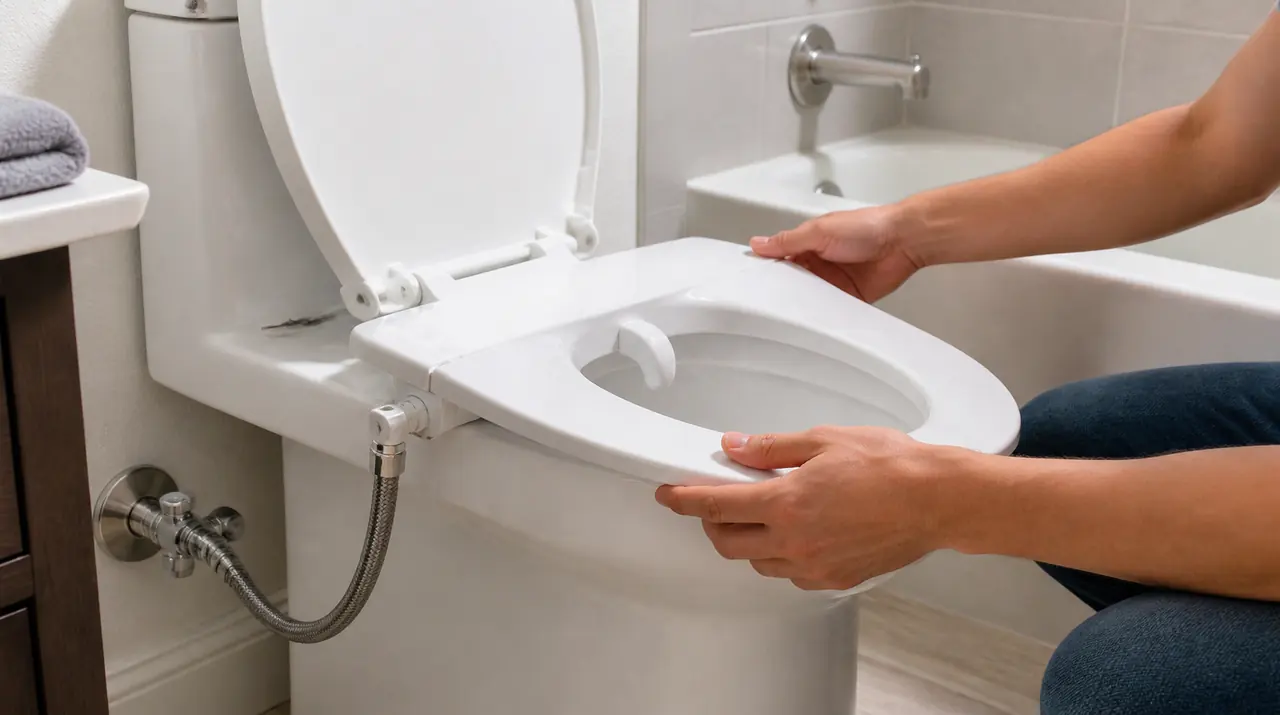
A non-electric attachment sits under the existing seat and sprays cold water. A bidet seat replaces the seat and adds a warm water spray, a dryer and a heated seat. A standalone bidet is a separate fixture beside the toilet and needs its own drain and supply.
The attachment and seat types fit most toilets. A standalone fixture is a bathroom remodel, with new pipe in the floor or wall.
A bidet seat needs a T-valve on the toilet's supply line, a short hose to the seat and a firm mount to the bowl. The plumber checks the shutoff for leaks and the bolts for fit.
Heated seats draw power from a nearby outlet. A GFCI outlet protects against shock near water. An electrician adds an outlet if there is none close enough.
Most of the cost is the seat. The labor is short unless wiring or new pipe is involved.
Ask who supplies the seat, and whether the installer checks the toilet's fill valve and supply line.
Older Lafayette bathrooms often have a single outlet, far from the toilet. An electrician can add a GFCI outlet near the bowl, and that work is separate from the plumbing.
Hard water leaves scale on bidet nozzles. A regional estimate lists the area at roughly 9 grains per gallon, so plan to descale the nozzle now and then.
A cold-only model is the simplest. A model with warm water either heats a small internal tank or connects to a hot line. The T-valve for a hot connection splices into the sink supply, which is a step beyond a basic install.
Ask the installer how the seat handles a cold start in winter, since unheated bathrooms on an outside wall can run cold. An internal heater smooths this out.
Position the controls where a user can reach them. Clean the nozzle as the maker directs and replace the filter if there is one. Hard water can clog the nozzle, so descale it as needed.
Check the connections after a week, since a new fitting can settle and seep. A dry paper towel held under the joint shows a drip fast.
Look at the controls and the shape. A side panel is easy to reach, while a remote suits a wall-hung layout. Check the spray positions, the water pressure settings and whether the nozzle has a self-cleaning cycle.
Measure the clearance between the seat and the tank lid. Some seats hit the lid, so it will not stay up, and others need a spacer. A quick measurement saves a return.
Run the unit through its cycles and look under the T-valve and the hose for drips. Wipe the joints dry and check again after a few hours.
Show every user how to stop the spray in case of a mistake, and set the water temperature to a comfortable level before first use. Keep the maker's manual for cleaning and descaling instructions.
Cure a running, wobbling or leaking toilet, or set a new one in place.
End drips, weak flow, stuck shutoffs and dripping outdoor spigots.
Replace a tub, shower pan or mixing valve, and rough in the drain to code.
Standard toilets take most of them. Measure the bolt spacing and bowl shape and check the maker's size list.
Only for heated or electric models. A non-electric attachment needs none.
Yes, because it needs its own drain and supply, so it is a remodel job.
Phone and ask. Bidet installs are quick and normally booked by day, and the dispatcher knows what is open. If a supply line is dripping right now, turn the stop valve and mention it.
Call, tell the dispatcher the toilet type and whether you have an outlet nearby, and ask about a visit.
Service area centered on Lafayette and nearby Boulder County cities.