
Water Heater Installation & Replacement
Pull a worn-out tank and select the proper capacity, fuel and exhaust.
A cold shower on a freezing morning gets attention fast. Most water heater faults come down to a few parts, and a clear description of the symptom usually points to the cause before anyone arrives.
When the tank itself is leaking, close the cold supply, cut power or gas and then phone.
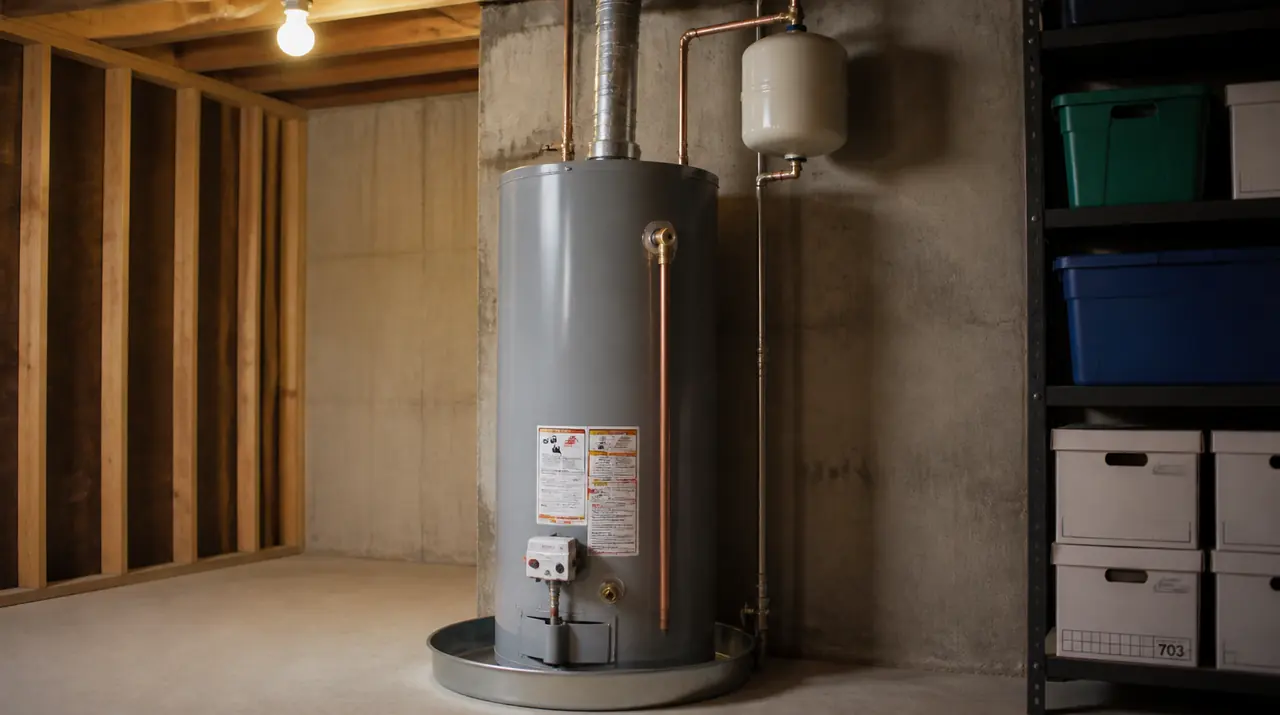
A gas tank heater relies on a pilot or an igniter, a thermocouple and a gas control valve. If the burner does not light, one of those is usually the cause. An electric tank has two heating elements and two thermostats, and one dead element leaves you with lukewarm water.
Tell the dispatcher the fuel, the label age and the symptom: no heat, lukewarm water, noise or a leak. Those facts shape the first visit.
Rumbling or popping means minerals have settled on the tank bottom and trap steam bubbles. Front Range tap water is hard, and a regional estimate from waterhardness.org lists the Lafayette area at roughly 9 grains per gallon.
Flushing the tank once a year clears loose sediment and helps efficiency. Heavy scale on the bottom may be too hard to flush out, and it is a sign the tank is aging.
Lafayette sits about 5,266 feet above sea level. Combustion air is thinner at that height, and a gas heater needs to be rated and set for it. Ask the technician to confirm a replacement burner or a new tank suits the elevation.
Many local homes keep the heater in a basement or a garage. Garage heaters must be kept from freezing, while a basement heater benefits from a floor drain or drain-piped pan so a leak spares finished rooms.
Repair cost depends on the part and on how easy the heater is to reach.
Have the repair quote and the replacement quote laid out together.
A drip from a supply connection, the relief valve or the drain valve can often be repaired. Water from a seam in the tank itself means the steel has corroded through and the tank needs replacement.
Check the drain pan and the floor around the heater. If water is running, close the cold supply valve above the heater, turn off power or gas and call. A pan that holds water protects the floor.
A tank heater lasts a decade or more. Past ten years, repairs get less cost effective, especially for a leaking tank. A relatively new heater with a failed thermostat is worth fixing.
Ask for both prices: the repair and the replacement. If you are leaning toward replacement, read water heater installation and replacement first.
Inside a tank heater, an anode rod corrodes in place of the steel. Once it is spent, the tank starts to rust. A technician can check the rod and replace it, and doing so can add years to the heater's life.
In hard water, the rod wears faster. Ask whether your heater has a replaceable rod and how often to check it.
Pull a worn-out tank and select the proper capacity, fuel and exhaust.
Descale a tankless unit, clear its error codes or replace it with a new one.
Pump out water, dry the building and repair it after a leak or flood.
An electric tank with one dead element will do this. A gas heater with a dirty burner or a bad thermostat can too.
Usually not, but it means scale is building up. Flush the tank and consider a softener.
Look for a dripping fitting or a relief valve. These can often be repaired. Close the cold supply and call.
The label's serial number carries the manufacture date in code. The dispatcher can help you read it.
Call the 24/7 line, tell the dispatcher the fuel type and what you see, and ask about shutting off the supply.
Service area centered on Lafayette and nearby Boulder County cities.