
Burst Pipe Repair
Cut off the flood, then repair the frozen or split pipe that caused it.
Wet building materials start to break down quickly. Restoration is separate from plumbing: a crew pumps out the water, dries the structure and repairs whatever could not be saved.
A separate restoration number is used on this page, meant for flooding and soaked structures.
If a supply line caused the flood, close the main valve at once. If the water came from outside, such as a storm or melting snow, do not wade through it while anything electrical is live. Turn off the breaker only if the panel is dry and you can reach it safely.
Before moving anything, film or photograph each wet room and keep the dates. Then lift furniture legs onto foil or blocks, pull up loose rugs and carry small valuables to a dry spot. Open windows if the weather helps, and phone the restoration line.
Restoration firms sort floodwater by how dirty it is. Clean water leaks from a pressurized supply pipe or a failed tank. Gray water carries soap and light contamination, as from a dishwasher or a washer that overflowed. Black water comes from sewer backups and rising outdoor flooding, and it can make people sick.
Dirtier water means more demolition. A clean-water leak may let a crew dry carpet and walls where they stand. Sewage-contaminated drywall and padding are cut out and bagged. Ask the lead technician which kind they believe it is and why.
The bill follows how much was wet, how dirty the water was and how long equipment has to run.
Request the scope on paper. When a claim is involved, ask if the firm will deal with your adjuster directly.
Lafayette homes with basements face a few repeat causes: a water heater that gives way, a sump that stops, sewage that backs up after a storm and melting snow that finds a crack in a foundation wall. Below-grade rooms hold water longer than upper floors.
Cold snaps add split pipes, and the damage often appears only after the thaw. Walk through the house when the water comes back on, and look for stains, dripping sounds and damp carpet near outside walls or in a vacant room.
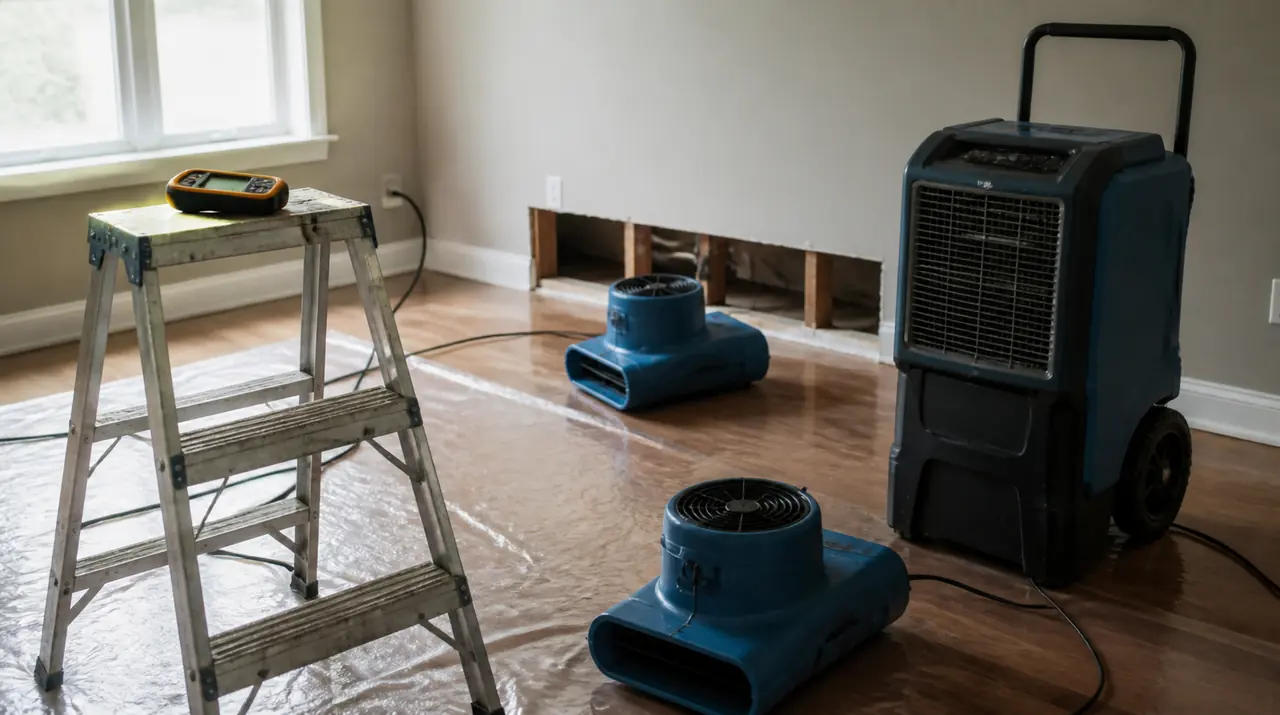
Work starts with extraction, using pumps and wet vacuums to take off standing water. Then fans push air across wet surfaces while dehumidifiers pull moisture from that air. Technicians return each day with a meter to check wall studs, subfloors and cabinets.
Drying is finished when readings match those of unaffected parts of the same building, not when things merely feel dry to the touch. A thermal camera can show cold, wet patches inside a wall. Dry Colorado air helps at the surface, yet water trapped in cavities needs equipment.
The EPA notes that mold can begin growing on damp material within one to two days. That is why speed counts more than almost anything else. If you already see fuzzy growth or smell it, tell the crew so they can set up containment before they start tearing out materials.
Once the structure is dry, the repair phase replaces insulation, drywall, trim and flooring, followed by paint. Some firms handle only drying and others also rebuild, so ask who does the carpentry. A plumber is a separate trade and fixes the pipe that started it all.
Call your insurer early and ask what documents it wants. Typical requests include photos, an itemized list of damaged belongings, receipts for emergency costs and a written scope of repairs. Keep damaged items until the adjuster says you may discard them.
Ask the restoration company for its daily moisture logs and equipment records. These show what was wet, what was removed and how long drying took, which makes a claim easier to review. Policies differ on sudden leaks, gradual leaks and outside flooding, so read yours.
Ask how soon someone can be on site, what equipment they bring and whether they will explain the water category in writing. Ask who removes contents, who disposes of debris and whether the quote separates drying from repairs.
Ask what happens if readings do not reach the dry standard on schedule. A clear answer shows how the company handles extra equipment days and whether it will stay in contact with your adjuster.
Cut off the flood, then repair the frozen or split pipe that caused it.
Locate a hidden leak inside a wall, under a floor or along a buried line before it stains drywall or inflates the bill.
Track down cold showers, rumbling noises, leaks and a pilot light that keeps going out.
Right away. Damp materials can grow mold within one to two days, so a call the same hour beats a call tomorrow.
If a pipe, valve or appliance caused the flood, yes. The restoration crew dries and repairs the building, and a plumber fixes the source.
No. It can carry sewage, chemicals and bacteria. Keep skin, children and pets away until a crew has handled it.
Many policies cover sudden interior leaks. Rising outside floodwater usually needs separate flood coverage. Call your insurer early and read what your policy says.
Yes. This page lists its own phone line, and it is staffed day and night. If it is safe, stop the water at its source first.
Dial the restoration number, state where the water originated and how much there is, and a crew will advise you.
Service area centered on Lafayette and nearby Boulder County cities.