
Toilet Repair & Installation
Cure a running, wobbling or leaking toilet, or set a new one in place.
A dripping faucet wastes water all day, and a leaking trap quietly rots the cabinet floor. These repairs are quick when you know the cause, and costly when a small leak is left for months. Close the shutoff valve first when a faucet will not turn off or a puddle forms under the sink, then phone.
The small valve beneath the sink isolates one fixture and leaves the rest of the house supplied.
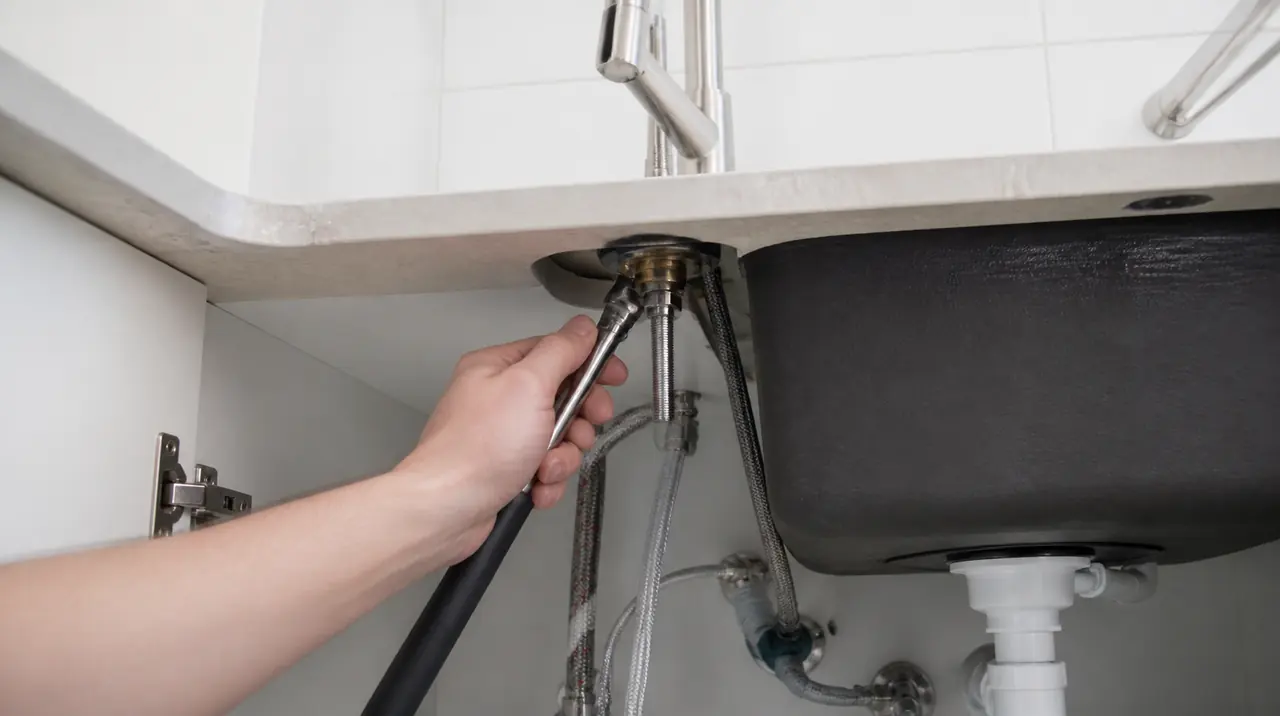
Most drips come from a worn cartridge or a seat in a single-handle faucet. Replacing the cartridge takes a short time and costs little. A faucet with a ceramic disc is rarely worth rebuilding when it fails.
A thin stream usually comes from the aerator, the little screen at the spout tip that collects mineral grit. Remove it and let it sit in vinegar. If flow stays low, check the stop valves and the supply lines.
Dry the cabinet and run the water, then follow it with a paper towel. A drip at the trap nut, at a supply connection or at the shutoff valve points to the part to fix. A cracked plastic trap is cheap to replace.
Check the faucet base and the sprayer hose as well. Water that seems to come from the drain may run down from above, so test each piece.
Mineral scale blocks aerators and wears cartridges in Lafayette's hard water, which a regional estimate puts near 9 grains per gallon. Cleaning the aerator twice a year keeps flow strong.
Outdoor spigots matter in Colorado, where cold snaps arrive without warning. Boulder County's 30 inch frost depth protects buried lines but not a spigot on the house wall.
Cost depends on the part and on how clean the old plumbing is.
Ask whether the visit price includes common parts such as washers, cartridges and supply lines.
The small valves under sinks seize with age, and they can fail to close when you need them. A valve that leaks around its stem or will not turn all the way should be replaced.
A plumber can swap a stop valve in minutes if the main is closed first. It is worth doing before the next emergency, not during it.
A hose left connected through a hard freeze can split the pipe behind the wall, and the leak shows up in spring when the tap is turned on. A frost-free spigot has a long stem so the shutoff sits inside the warm wall.
Disconnect hoses in fall and drain the line. If the spigot drips or a wall inside the house is wet, call early, since a hidden split can run all season.
A faucet with a corroded body, a cracked spout or a finish that has worn through is time to replace. Match the number of mounting holes on the sink, and check how the supply lines connect.
A pull-down kitchen faucet needs room beneath the sink for the weighted hose. Measure the gap between the sink and the wall to make sure a tall spout will clear the window or the cabinet.
Cure a running, wobbling or leaking toilet, or set a new one in place.
Free a jammed disposal, stop a leak under the sink, or hang a new unit.
Locate a hidden leak inside a wall, under a floor or along a buried line before it stains drywall or inflates the bill.
A steady drip can waste a few gallons a day, which adds up over months.
Mend a faucet whose body is healthy and parts can be found. Replace one with a corroded body or a worn-off finish.
A clogged hot-side valve, a scaled water heater line or a blocked cartridge port can cause it.
It may be, even after hours, since the water keeps flooding the cabinet or floor. Close the stop valve under the sink or the main, and then phone. A tired cartridge is a frequent culprit.
Turn the stop valve off, ring the all-hours line and tell the dispatcher how the water is behaving.
Service area centered on Lafayette and nearby Boulder County cities.