
Leak Detection
Locate a hidden leak inside a wall, under a floor or along a buried line before it stains drywall or inflates the bill.
Pipes do not last forever. When a house keeps springing pinhole leaks, loses pressure or produces brown water, patching one spot at a time stops making sense, and replacing the supply lines through the whole house may.
A single leak is a repair job, but three in twelve months show a trend.
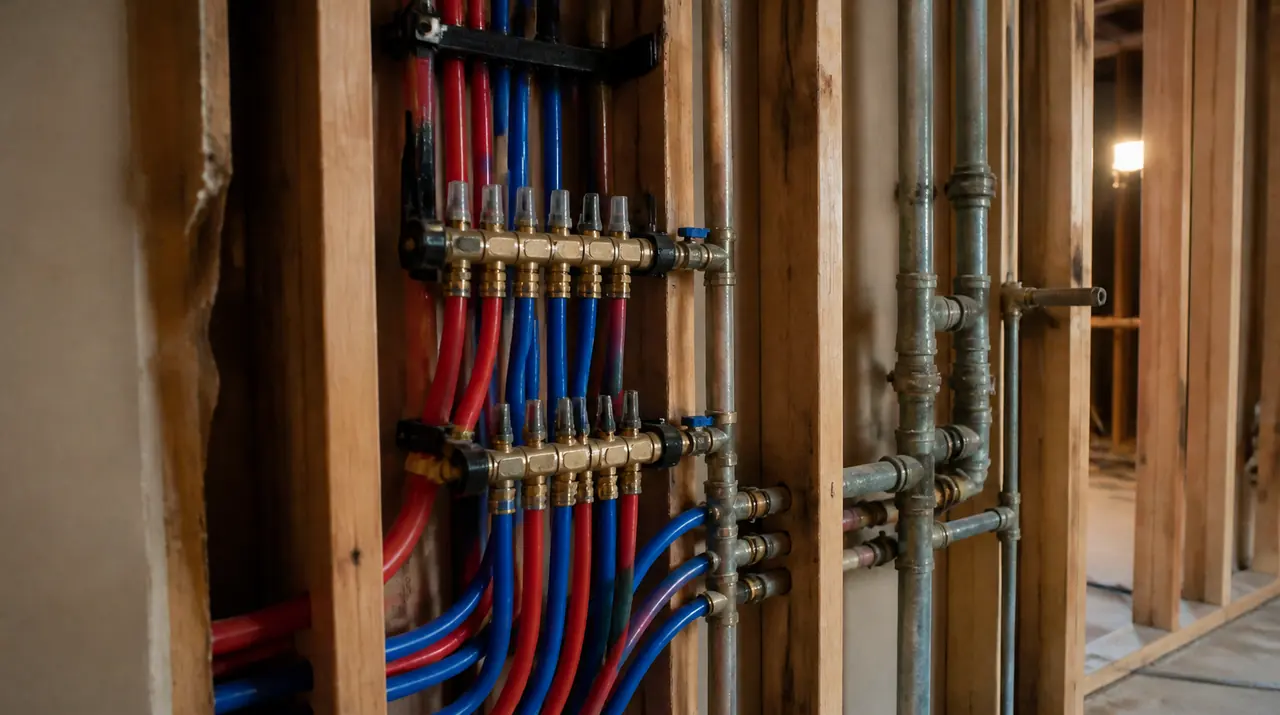
Galvanized steel was common in older homes and rusts from the inside, closing the pipe and turning the water brown. Polybutylene, a gray plastic installed between the late 1970s and mid 1990s, was widely swapped out because its fittings failed.
Copper lasts a long time, but acidic or mineral-heavy water can wear thin spots, producing pinholes. A plumber can look at an exposed section and check the pipe's wall thickness.
PEX is bendable plastic tubing that turns corners with few joints and tolerates a freeze better than rigid pipe does. It cannot be used outdoors in sunlight or near a heater flue without proper protection.
Copper is pricier and slower to install, yet it has a long track record and copes well with heat and UV light. The contractor can explain the code approvals in Lafayette and which suits your house.
A regional estimate from waterhardness.org lists Lafayette water as hard, around 9 grains per gallon. Minerals build up inside hot water lines and fixtures and speed scaling. A softener can slow that wear.
Ask the contractor whether the new pipe needs insulation in garages or exterior walls. Boulder County's 30 inch frost depth means buried lines are safe, but lines in cold attics and walls are not.
Repiping is priced by the size of the house and the work needed around the pipes.
Ask whether the quote includes permits, inspection and drywall patching.
The crew shuts off the water, drains the lines, and runs new pipe through walls, the attic or the basement ceiling, connecting at each fixture. Most work is done by cutting small access holes in drywall instead of tearing out whole walls.
Repiping is a multi-day job in many houses. The crew pressure tests the new lines, the inspector signs off, and the drywall patches are left ready for paint. Part of each day the water will be shut off.
If your house has the original galvanized pipe, or any polybutylene, replacement is on the calendar even when nothing leaks yet. If you have had two or three leaks in a short time, ask for an inspection.
A leak detection visit is a smart first step, because it tells you whether the problem is one bad pipe or the whole system. See leak detection for how that works.
Open a path to the water heater, the main shutoff and every room that has fixtures. Move furniture away from walls where the crew will cut drywall. Water will be off for part of each workday, so keep some drinking water on hand.
Ask how the crew shields floors and furniture, controls drywall dust and finishes the access openings. A crew that lays drop cloths and uses dust barriers makes the work easier to live with.
Run every fixture, flush each toilet and look at the new joints for weeping. Check the water pressure and listen for water hammer. New plastic or copper can change how water sounds in the walls.
Keep the permit, the inspection sign-off and the warranty with the home records. Notify your insurer, because newer plumbing can affect coverage and the premium.
Locate a hidden leak inside a wall, under a floor or along a buried line before it stains drywall or inflates the bill.
Track down a pipe leak under a concrete slab or basement floor and choose between a patch and a reroute.
Fit a softener for hard Front Range water, or get a tired one regenerating again.
Often several days for a typical house, with water off for part of each day. The contractor can give a schedule after seeing the layout.
Usually not. You lose water for hours at a time, and some contractors restore it each evening.
If the cause is clogged old pipe, yes. A failing regulator or a street-side problem needs a different fix.
Yes. Repiping is booked in advance, though an active leak can be called in at any hour. If water is spreading, close the main and ask the dispatcher about timing.
Phone in, list the leaks, the home's age and the pipe material, and ask whether an inspection visit is possible.
Service area centered on Lafayette and nearby Boulder County cities.