
Leak Detection
Locate a hidden leak inside a wall, under a floor or along a buried line before it stains drywall or inflates the bill.
A hot tub is a tank of water with pumps, heaters and a lot of fittings, and any of them can leak. The plumbing side covers the pipe, valves and drains. Electrical work belongs to an electrician.
Switch the power off at the spa disconnect before you look at a leak.
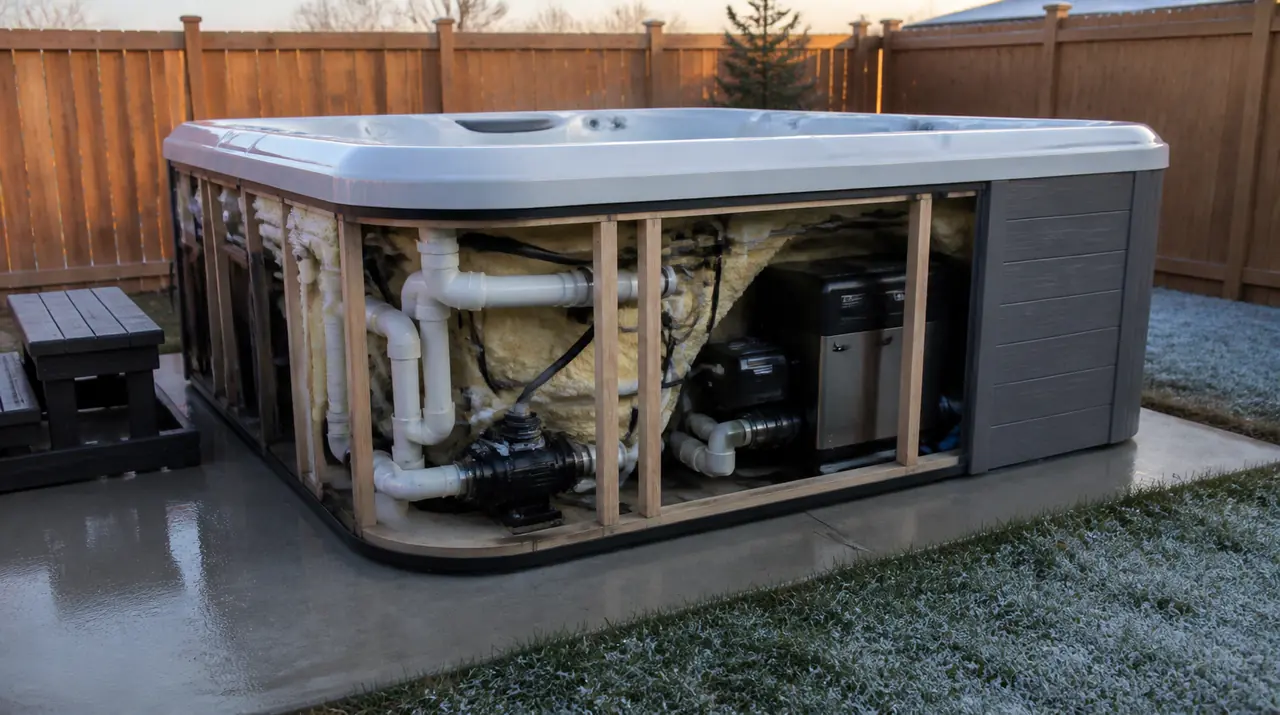
Spa leaks are slippery to find. Water may run along a pipe, through the insulation and out the cabinet at a different spot. A pressure test of each loop, plus a look around the pump and heater, narrows it down.
Mark the water level and watch for a drop over a day with the covers on. A drop of an inch a day is more than evaporation. A leak with the pump off points to a shell fitting. One that only shows with the pump on points to a pressure-side fitting.
A new tub needs a way to fill and drain. A hose bib or a short supply line fills it, and a drain line or a pump-out hose empties it. A plumber can run a dedicated drain with a cleanout so you are not draining across the yard.
Fill sources should have a backflow device where the code requires one, so hot tub water cannot flow back to drinking water. See backflow testing for the principle.
Spa jobs vary from a quick union tightening to rerouting a full pad.
Ask which parts are plumbing and which need an electrician, and get both quotes.
Boulder County lists a 30 inch frost depth, and any buried line to a spa pad needs to sit below it. A line laid shallow will freeze before the house line does.
Snow load on a cover, ice on a deck and a power failure are the three winter threats. Check the cover seal and the drain plug before the first hard freeze.
A hot tub that is running keeps its water moving and warm, which protects it. A tub that is shut down in winter has to be drained and blown out, or the pipes can split. Power outages during a cold snap are the biggest risk.
If you plan to leave a tub empty, a plumber or a spa technician can drain the lines and blow them out with an air compressor, then add antifreeze approved for spas.
The heater, the control pack and the wiring need an electrician. Plumbing covers the water side, the drains and the supply. A split job needs coordination, so ask each trade what the other will handle.
A permit is typically required for the electrical connection. Ask whether the plumbing work needs one and who handles it.
Switch off the spa breaker before draining, because heaters can burn out when the water level drops. Most tubs empty through a drain valve or a submersible pump, and the water should go where local rules allow, not into the street.
Refill from the garden hose with the filter cartridge pulled, so air does not lock in the plumbing. After the water is back, restore power and check the jets and heater for steady flow.
A tub that loses water faster than evaporation explains, a soft or sunken spot in the yard near the equipment pad, or a wet cabinet inside the shell all suggest a leak. Mark the waterline, turn off the jets and check again the next day.
If the level stops dropping with the pumps off, the leak is in the pressurized plumbing. If it keeps dropping, the shell, a fitting or a skimmer may be at fault.
Locate a hidden leak inside a wall, under a floor or along a buried line before it stains drywall or inflates the bill.
Test the device that stops sprinkler water from flowing back into the drinking supply.
Track down cold showers, rumbling noises, leaks and a pilot light that keeps going out.
Often, if the lines are reachable. A leak under the shell may need a spa manufacturer's technician.
The tub itself is delivered and set by the dealer. A plumber helps with the fill line, drain and backflow device.
Keep it running with a good cover and power. If you shut it down, drain and blow out the lines.
Yes. Kill the power at the spa disconnect, then phone. A slow weep can hold until morning, but a split pipe pouring water should be reported immediately.
Switch off the spa disconnect, ring the all-hours line and say which way the water is heading.
Service area centered on Lafayette and nearby Boulder County cities.