
Water Heater Installation & Replacement
Pull a worn-out tank and select the proper capacity, fuel and exhaust.
New plumbing goes in during three stages: under the slab or in the trenches, inside the framing, and at the finish. The earlier the plan is settled, the fewer walls and floors need to be cut open later.
Bring plans or a sketch of the fixtures when you ask for a bid.
Before concrete is poured, the plumber lays drain lines at the correct slope and sleeves where pipes pass through the slab or foundation. Inspectors review the work before walls hide it.
In Boulder County, the building publication lists a frost depth of 30 inches and requires water lines at least 36 inches deep. Sewer lines must keep a 5 foot horizontal distance from water lines or use the allowed ledge arrangement.
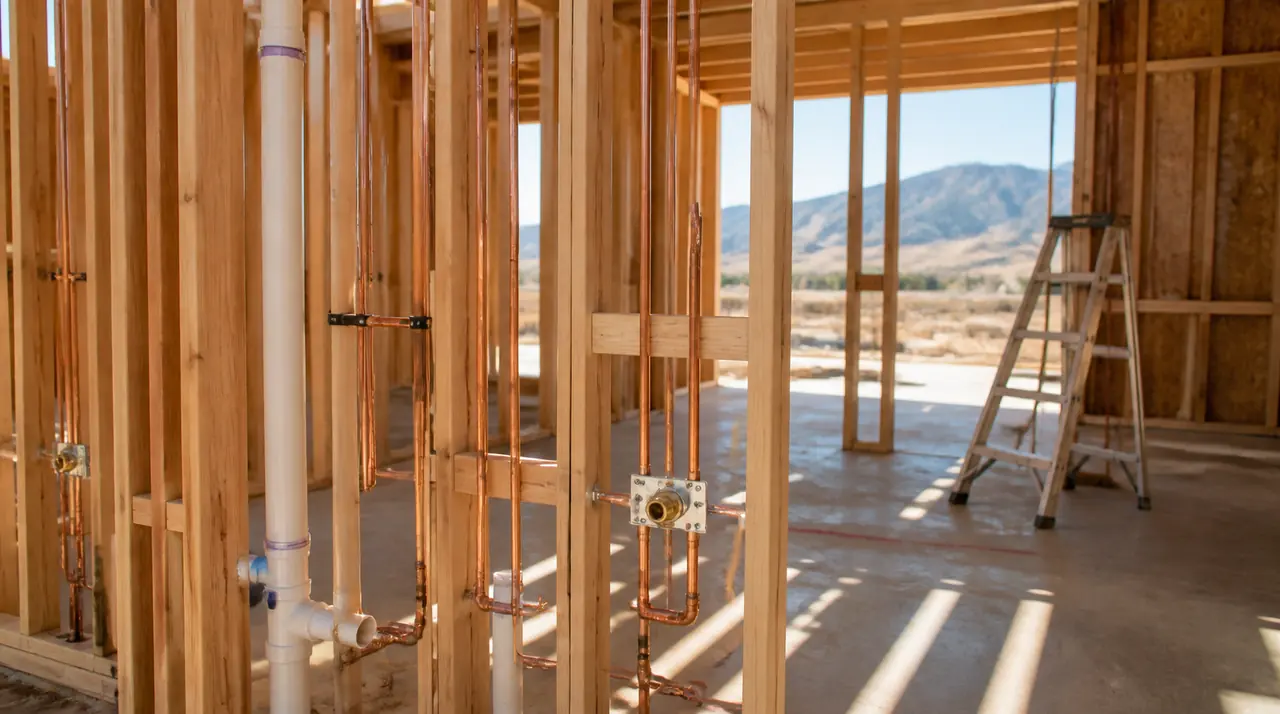
After framing, the plumber runs supply lines, drain and vent pipe through the walls and floors, sets tub and shower valves, and pressure tests the system. The inspector checks it before insulation and drywall.
Plan fixture locations early, including the water heater, laundry box and any outdoor spigots. Changing a drain after drywall is expensive.
The City of Lafayette Building Division reviews permits under the 2024 I-Codes and publishes a local building code. Nearby places such as Erie and Broomfield have their own offices, so confirm the jurisdiction for your lot.
Front Range clay soil moves, so pipe bedding and sleeves matter. A good plumber checks them before the concrete goes in.
Bids are based on the plans, the fixture count and the site.
Ask which fixtures and trim are included, and whether the permit is part of the bid.
The finish stage sets toilets, sinks, faucets, tubs, showers and the water heater, then connects the gas and tests everything. The inspector signs off on the final.
Check the fixtures for leaks, flush every toilet and run each tap to catch problems before the final walk-through.
A finished basement often adds a bathroom or a wet bar. If the house has no rough-in, the plumber breaks the slab to run the drain, or uses an ejector pump when the main drain is above the floor.
An addition ties into the existing lines. The contractor checks the capacity of the existing water supply, the water heater and the sewer lateral before connecting.
A typical new build has several plumbing inspections: one for underground work before the trench is covered, one for the rough-in before insulation and drywall, and a final once fixtures are set. The inspector checks slope, support, venting, pressure tests and fixture clearances.
Stay in touch with the plumber about scheduling. A missed inspection can stop the framers or the drywall crew, which delays the whole job. Keep the inspection card visible on site, since the inspector signs it at each stage.
The cheapest time to add a stub-out is during rough-in. A capped line for a future basement bath, a gas stub for a patio fire pit or a hose bib on the far side of the house costs far less now than after the walls are closed.
Think about access to shutoffs too. A shutoff behind a finished wall is useless in an emergency. Ask for valves in a closet, a cabinet or an access panel, and label them clearly before the move-in.
Plumbing competes for room with framing, ductwork and wiring. A few minutes at the plan stage avoids conflicts, such as a drain that needs a floor joist notched or a vent that runs into a duct. Ask the plumber and the builder to review the plans together.
Protect the rough-in once it is done. Open pipe ends should be capped so debris does not enter, and exposed lines should be sleeved where drywall screws or nail plates might strike them.
Pull a worn-out tank and select the proper capacity, fuel and exhaust.
Install or mend gas piping to a stove, dryer, fireplace, barbecue or generator.
Replace a tub, shower pan or mixing valve, and rough in the drain to code.
Early, before the slab and the framing, so the layout is planned.
The plumbing contractor or the builder. Ask which.
Mention the builder on the call. The contractor can coordinate.
The plumber checks the slab, the drain depth and whether a pump is needed.
Someone answers at every hour. Rough-in follows the builder's calendar, but a burst line or flooded trench on the lot can be called in at any time.
Call, describe the project and ask about a bid.
Service area centered on Lafayette and nearby Boulder County cities.